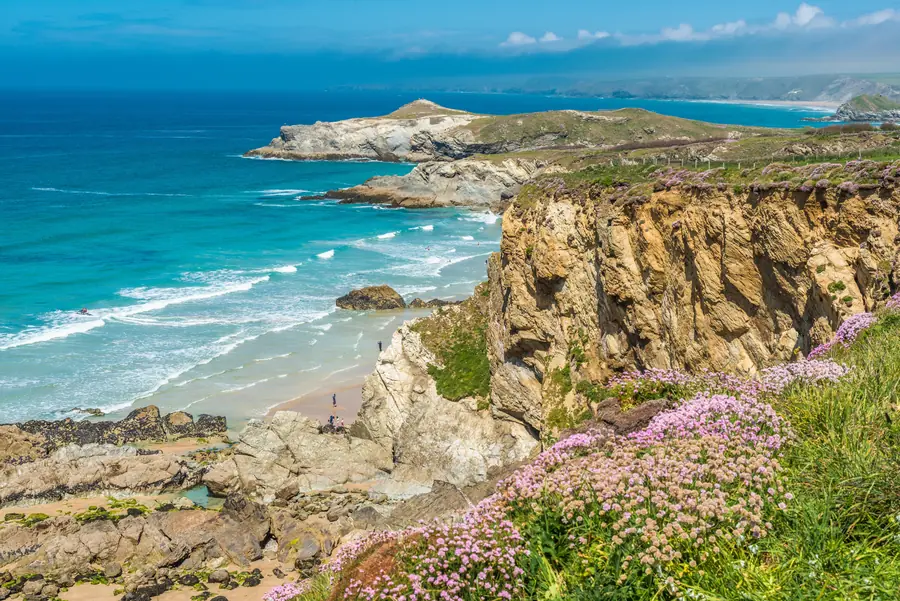
Newquay is one of the few Cornish resorts where leaving the car at home is a plan rather than a dare. The station is three hundred metres from the town centre. The town beaches are under the cliff, a walk and a flight of steps apart. Buses run along the coast in both directions. The thing the car is for — the tin coast, Bodmin Moor, a late table in Padstow when the last bus has gone — is a different holiday.
This is the car-free stay. The parking article is the other one.
Arrive on the branch line. Walk to Towan, Great Western and the harbour. Use the bus for Watergate, Padstow, Perranporth, Crantock village and Truro. Do not try to do St Agnes, Bedruthan and the Eden Project on the same day without looking at a timetable first. Frequencies change; National Rail and Traveline South West are the documents to trust, not a paragraph in a guide.
Newquay sits at the end of the Atlantic Coast Line, the branch from Par on the Cornish main line. Most journeys change at Par. Direct trains from London Paddington exist in summer and are thin — a handful a day at most — so outside those months plan on the change. Par to Newquay is under an hour; Paddington to Par is the long bit.
Since the Mid Cornwall Metro work, local services on the branch have been stepped up. That is a real improvement on the old two-hourly shape, and it is also the sort of thing operators adjust. Check the day’s trains on National Rail or Great Western Railway before you build a connection at Par with seven minutes to spare. Request stops along the branch — Luxulyan, Bugle, Roche, St Columb Road — mean you tell the conductor. Quintrell Downs is the last halt before town.
The station is on Station Parade, about 300 metres from the centre, step-free to the platform, with no ticket office. Cliff Road takes you toward Great Western and the seafront; the town is the other way. APCOA run the Newquay station car park on Station Parade if someone is meeting the branch; you do not need it.
Coming from the south coast, Truro is the other useful interchange: buses from there into Newquay are frequent by Cornish standards, and the main line through Truro is the spine of the county. See day trips for where those connections actually get you.
This is the argument for not bringing a car.
Great Western is a few minutes below the station, which is why it is called that. Steps and a ramp drop to the sand. Towan is the next cove west, with the Blue Reef Aquarium on it and the harbour beyond. Tolcarne is east. At low tide they join, and you can walk the sand as far as Lusty Glaze without going back up the cliff.
Fistral is the other way, twenty to thirty minutes on foot across Towan Head, which is a walk you want to do anyway. Watergate Bay is the first beach that really wants a bus.
Hills are the catch. Newquay is built on top of a cliff, and every beach is a descent. Luggage, buggies and anyone who does not like stairs need the ramp at Great Western, or a stay on the seafront rather than up in the town. The harbour is down South Quay Hill; our harbour piece is that outing.
Once you are on the front, you do not need transport until you leave it. That is the whole trick.
Manor Road bus station, a short walk from the centre, is the hub. Go Cornwall Bus and the rest of the Transport for Cornwall network run the useful routes. Timetables move with school days, Sundays and the season; look them up on Traveline or the TfC journey planner for the day you are travelling.
The shape, not the clock:
North-east along the coast — Porth, Watergate Bay, Mawgan Porth, the airport, on toward Padstow. This is the bus that turns a Watergate day into a one-way coast-path walk.
South-west — Perranporth, St Agnes, the tin coast. Useful for Wheal Coates if you are prepared to walk from the village rather than from a clifftop car park.
Inland to Truro — the workhorse. Roughly every half hour has been the advertised pattern; confirm it. Truro is Cornwall’s only city and the wet-day escape.
Crantock — the National Trust page lists Go Cornwall 85 between Newquay and Truro, with a stop by the round garden in Crantock village, about half a mile from the beach. That is a village drop, not a dune-side one. There is no year-round town-to-sand shuttle.
East toward St Austell, Par and Fowey exists and is thinner. For Eden, it is a connection rather than a single seat; check, or go to Par by train and bus from there.
Contactless on the bus is normal. A county day ticket is often cheaper than two or three singles if you are hopping. Confirm on the operator or TfC, because the product names change.
You can have a full Newquay week on foot.
The town beaches, the harbour, Towan Head and the Huer’s Hut, Fistral, Pentire, Trenance Gardens, the zoo and the boating lake are all inside a walking town. Our walks guide and beaches guide cover the ground. The coast path north-east toward Lusty Glaze and Watergate, and south-west toward the Gannel, is the longer version of the same idea.
What walking does not do: Polly Joke without a long loop, Holywell, Bedruthan unless you bus one way, Trerice (a country lane inland), Lappa Valley, Camel Creek. Those are bus-plus-walk or they are a car.
Tides still govern the sand routes. The town beaches connect at low water and split at high. Do not start a Lusty Glaze-to-Towan walk without a tide table and a way up the cliff if the water comes in.
Crantock is the test of a car-free stay, because the estuary is in the way.
Three crossings, all seasonal or tidal:
The Fern Pit ferry, from Pentire on the Newquay side, is a foot-passenger boat to Crantock Beach. For 2026 the operator listed it 10am–6pm from mid-May until the tides changed in mid-September. That is an operator timetable, not a public bus. Confirm on fernpit.co.uk before you walk out to the landing. The café above it is a destination in its own right.
Seasonal footbridges across the Gannel work around low tide only. The classic mistake is walking over at low water, spending four hours on the beach, and finding the bridges under. Check the tide, and know that the road way round is Trevemper.
The 85 to Crantock village, then a walk to the dunes.
In winter, the bus or the long walk round is the answer. The ferry is not. Our Crantock and the Gannel article is the rest of that day.
There is no car ferry, and no reason to want one.
Lappa Valley is five kilometres inland at Benny Halt. It is a tourist railway, not a National Rail halt; you get there by bus toward the Quintrell and St Newlyn East side, or by taxi. Do not confuse it with the branch-line request stops.
Trerice is a National Trust manor at Kestle Mill, a country lane from town. Buses toward Truro pass nearer than they used to; the last stretch may still be a walk down a narrow road. Check Traveline for the current stop, and do not assume a Sunday service.
The Japanese Garden at St Mawgan sits on the airport / Mawgan Porth bus corridor, which makes it easier than it looks.
Camel Creek is a family park north of the town and a fiddle on public transport. If that is the day, it is a taxi or it is a car.
The Eden Project is the one everyone asks about. From Newquay it is a train to Par or St Austell and a bus, or a longer bus journey via Truro. It is a full day. It is doable. It is not spontaneous. Look up the combination the night before.
Cornwall Airport Newquay is a few kilometres north of town, on the Padstow bus corridor. There is a bus; there are taxis; there is not a tram. Flight times and bus times do not always agree, particularly early and late. If you fly in with surfboards and a family, budget for a taxi on at least one of the legs. The getting here page covers arrival.
What the car is actually for, if you were wondering whether to hire one for a week:
The tin coast beyond St Agnes when you want Chapel Porth at the bottom of the valley and Wheal Coates on the cliff in the same morning. Bedruthan if you missed the bus. Holywell and Polly Joke in one loop. A late dinner in Padstow after the last 56. Bodmin Moor. The Roseland.
What it is not for: Towan, the harbour, Fistral, the zoo, a lesson on Great Western, a night on Fore Street. For those, the car is something you then have to park.